
Designing Haunted Manors in Ravenwood
Building atmospheric haunted manors in The Sims 4 used to feel like an exercise in compromise. Base game architectural assets skew bright, modern, and cheerful, while the Vampires and Paranormal packs, although stylish, offer limited furniture catalogs that run out of fresh options after two builds. Creating a truly imposing ancestral estate full of decaying grandeur, heavy wood paneling, and dusty heirlooms requires diving into specialized custom content.
Recent community releases tailored for gothic builds and spooky storytelling deliver extraordinary architectural versatility. Creators have moved far beyond cartoonish plastic cobwebs, focusing instead on authentic Victorian Gothic craftsmanship, tactile masonry, weathered timber finishes, and period-accurate architectural moldings.
Architectural masonry, arched windows, and ironwork
A convincing gothic estate begins with exterior structure. Pointed lancet windows, stone tracery, and wrought iron roof cresting instantly establish imposing vertical silhouettes against foggy Ravenwood skies. Top creators design these windows with multi-story height options, allowing builders to construct cavernous ballroom walls and grand cathedral ceilings that let shafts of moonlight pour across dark floors.
Exterior walls benefit from layered brick textures showing realistic water stains, chipped plaster, and crawling ivy decals. Wrought iron gates featuring twisted gargoyles and fleur-de-lis finials set a somber perimeter, turning simple suburban boundaries into foreboding cemetery entrances. Stone corbels and gargoyle downspouts add sculptural depth to exterior rooflines, preventing flat wall facades from looking like bland stucco boxes.
Weathered wallpapers and decaying wood panelling
Moving indoors, wall treatments define the interior mood. Striking gothic CC sets feature embossed damask wallpapers with subtle velvety sheen, paired with dark mahogany wainscoting that looks centuries old. Rather than pristine showroom surfaces, swatches incorporate faint peeling seams, water marks, and fading dyes that tell stories of family decline.
Flooring selections lean heavily on distressed herringbone parquet, worn flagstones, and faded Oriental rugs with frayed borders. These textures ground large rooms, ensuring sprawling corridors feel drafty, quiet, and storied rather than empty and sterile. Placing runner rugs down drafty corridors dampens footsteps visually, giving hallways an ancient monastery atmosphere.
Antique Furniture and Opulent Upholstery
Furnishing a grand salon requires pieces that command presence. Standard EA sofas often look too buoyant and casual for a serious Victorian parlor. In contrast, custom gothic sets provide heavy, high-backed seating with button-tufted velvet, tarnished brass nailheads, and hand-carved lion paw feet.
Pairing dark antique furnishings with curated decorative accents like those in the Sunroom Relics cc set allows you to blend decaying parlor pieces with botanical curiosities, creating the authentic home of an eccentric Victorian naturalist or an ancient vampire scholar.
Velvet wingback armchairs and carved canopy beds
The bedroom serves as the dramatic emotional anchor of any gothic build. Custom canopy beds featuring heavy brocade drapes, spiraling wooden posts, and velvet headboards immediately command the center of master suites. The drape meshes are modeled with natural folds and shadow weight, looking like heavy antique cloth designed to trap heat in drafty castles.
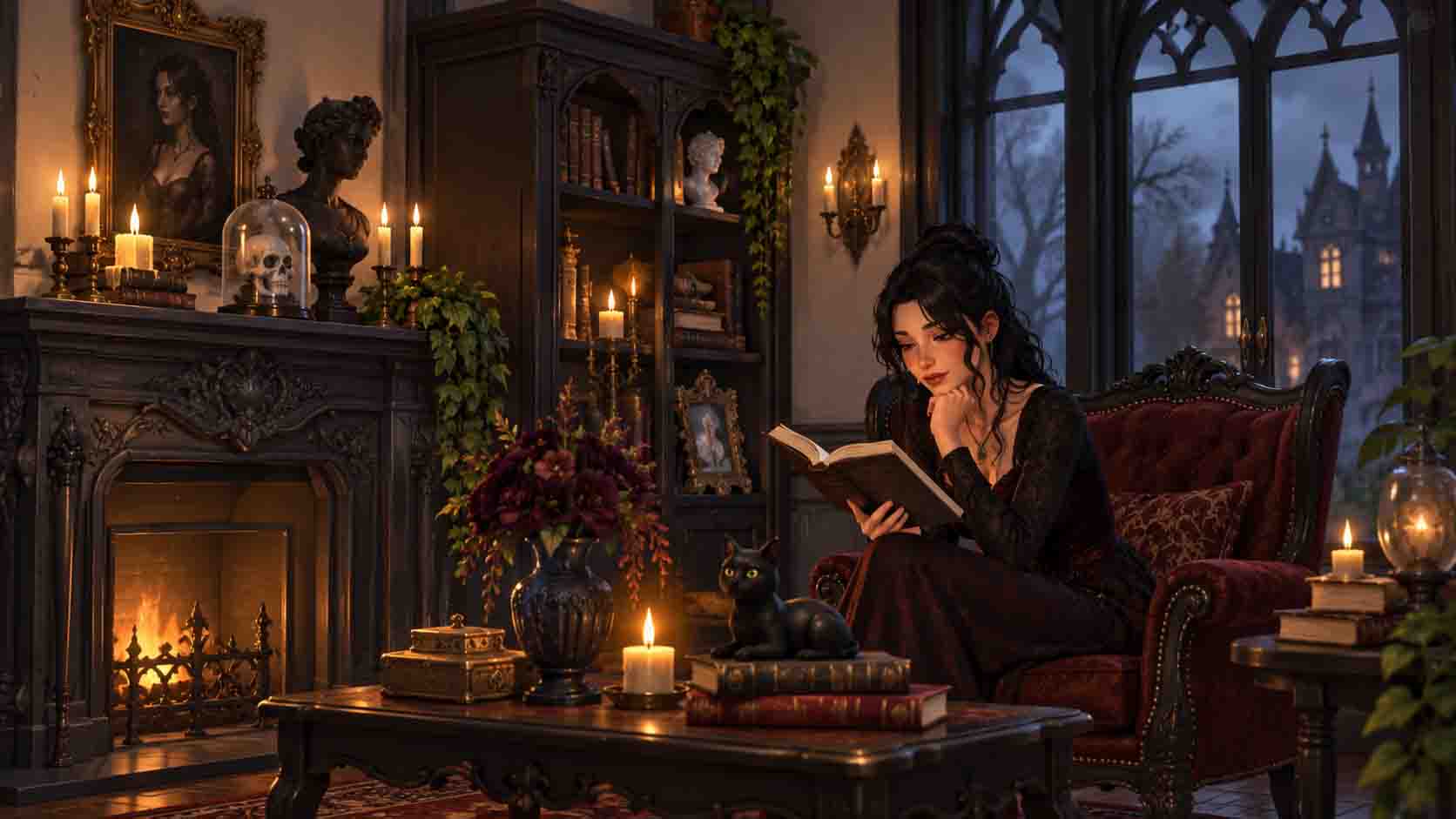
Fireside wingback armchairs offer the perfect reading spot for brooding spellcasters. Swatches range from deep oxblood red and midnight emerald to tarnished charcoal and bruised plum. The fabric normals catch fireplace embers realistically, casting flickering warm highlights across velvet cushions.
Heavy mahogany dining sets and grandfather clocks
Grand dining halls require banquet tables capable of seating twelve Sims, flanked by carved high-backed chairs that look straight out of an ancient manor. The wood textures on dining tables feature rich, hand-rubbed luster with subtle surface scratches and ring marks from vintage wine goblets.
Towering grandfather clocks with pendulum animations add auditory presence to quiet hallways. Hearing the deep chiming reverberate through a dimly lit estate at midnight anchors the supernatural tone, reminding players that time is slipping away for their mortal inhabitants. Ornate fireplace mantels carved from dark ebony marble finish the hearth area with dramatic flair.
Clutter Sets, Spellcasting Trinkets, and Lighting
Empty tables kill the illusion of history. Gothic builds depend heavily on dense tabletop clutter to look convincingly inhabited. Dedicated clutter creators supply messy piles of leather-bound grimoires, dripping candelabras with pooling wax, brass magnifying glasses, and vintage apothecary jars filled with strange preserved herbs.
Lighting assets prioritize mood over clinical visibility. Dim candle sconces, stained-glass table lamps, and wrought iron chandeliers cast warm, low-intensity pools of light rather than blasting the room in sterile white daylight. Long cast shadows stretch across patterned rugs, accentuating dark corners where ghosts love to congregate.
Tattered grimoires, candle wax, and dried flora
Small decorative accents do tremendous heavy lifting across desks and side tables. Stacks of yellowed parchment with handwritten Latin text, open spellbooks with arcane diagrams, and dried lavender bundles hanging from iron hooks give workshops an authentic occult charm. The wax drippings on candelabra bases feature subtle translucency shaders that capture flickering flames convincingly.
Wall hangings contribute equal flavor. Tarnished gold frames housing brooding ancestor portraits, cracked oval mirrors reflecting dust particles, and taxidermy specimens evoke Victorian curiosity cabinets. Every tiny knick-knack adds layers of visual history to lived-in supernatural spaces.
Slot Density, Tool Integration, and Performance
Experienced builders know that cluttering surfaces can be infuriating without generous decorative slots. Well-crafted custom desks, sideboards, and fireplace mantels include dozens of invisible deco slots, allowing players to stack books, quill pens, and incense burners without turning to complex elevation cheats.
For advanced staging with the TOOL mod, these objects possess cleanly defined bounding boxes that rotate smoothly without disappearing into floor geometries. Sims route around heavy desks and side tables cleanly, provided primary pathway tiles remain free of oversized footprint collisions.
Optimizing high-polygon build items on older rigs
Ornate wood carvings and complex candelabra geometries naturally require higher polygon counts than simplistic modern furniture. Top CC creators manage this by utilizing efficient normal maps to simulate deep carvings without inflating raw poly counts into performance hazards.
Keeping package file sizes lean and organizing sets into cohesive merged folders keeps build mode responsive. You can furnish a sprawling three-story estate with hundreds of custom assets while maintaining steady frame rates during live mode family dinners.
Final Verdict for Macabre Builders
Building dark, atmospheric estates is one of the most rewarding creative outlets in The Sims 4, and high-quality gothic CC elevates that experience from mediocre to breathtaking. With rich velvet upholstery, distressed masonry, moody candelabras, and antique clutter, these sets give builders everything needed to craft unforgettable haunted manors that stand the test of time.